The Ethical Footprint of a Photograph – Why Distance Isn’t Always the Answer
- Lars-Henrik Roth

- Nov 29, 2025
- 5 min read
Updated: Dec 20, 2025
An essay on how iconic landscapes, carbon footprints, and the culture of photographic consumption challenge us to rethink what responsible nature photography can be — and why the most meaningful images often begin close to home. | By Lars-Henrik Roth
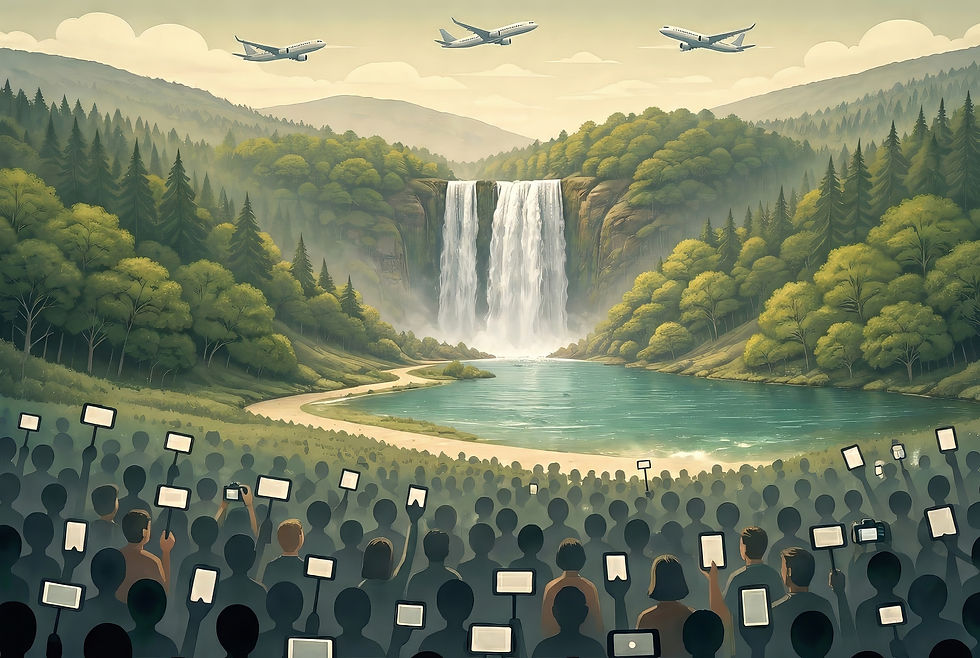
There are landscapes you recognize long before you ever stand in them — Fanal on Madeira, Trolltunga in Norway, Kjeragbolten balanced impossibly between two cliffs. These places have become visual icons, spread across social media and guidebooks until they feel almost mythic. They promise the perfect photograph. And yet the closer a landscape drifts toward legend, the more complicated its reality becomes.

At some of these sites, the ground tells the story before the horizon does: trampled moss, widened paths, makeshift fences, emergency huts. A place once shaped by wind and weather is now shaped by footsteps, drones, and the expectation that something extraordinary will happen on cue. Most photographers don’t set out to harm nature — far from it. They travel because they admire these places deeply. But admiration, repeated by thousands, becomes pressure. And pressure always leaves traces.
What is rarely discussed is the harm that occurs before anyone reaches the trailhead. A single round-trip flight to Madeira produces roughly 1,400 kilograms of CO₂. In comparison, ten full drives to local Photohike spots — about 200 kilometers per round trip — amount to roughly 140 kilograms of CO₂, especially when powered by green electricity. The numbers are not abstract; they reveal a simple truth: the most dramatic environmental impact of many “epic shots” happens in the sky, long before the shutter clicks.
My own wake-up moment came not at a world-famous location but at Burg Eltz in the Rhineland. I arrived before sunrise to soft fog and quiet light, took my photographs, and lingered. Then, as the sun lifted, the first buses rolled in. Dozens of people streamed toward the viewpoint they had seen online — eager, hopeful, and already too late. The magic had passed. The moment was no longer theirs. It struck me that a place can lose its meaning the moment it becomes a checklist item.

That morning didn’t make me cynical — it made me intentional. I began to prefer photographing landscapes I can reach in about ninety minutes, not as a strict rule but as an ethical compass. Locality became less about distance and more about attention. When you stop chasing icons, you begin searching for light instead. Anyone can buy a plane ticket. Very few return to the same small hill ten times to learn how dawn behaves there.

Proximity changes the way you create. When you photograph close to home, you begin to understand the rhythms of place: where fog gathers after rain, how the sun moves in December, which valley holds frost the longest. You stop hoping for conditions and start predicting them. Familiarity sharpens vision. Local landscapes become classrooms — and teachers with more patience than any distant mountain could ever offer.

This is why Photohiking resonates so deeply with me. It is not about chasing drama but about earning it. When you walk before you photograph, the land reveals itself gradually. You hear changes in the wind, notice subtle shifts in shadow, sense when a scene is about to come alive. Photohiking slows the pace of photography to the pace of the body — and in doing so, restores dignity to the act of seeing.
Most photographers who travel far do so out of genuine passion. But passion becomes unsustainable when it depends on constant movement. The irony is painful: we travel to express our love for nature, yet often harm the very landscapes we celebrate. Responsible photography does not demand perfection — only awareness. We cannot control global tourism, but we can control our personal footprint.

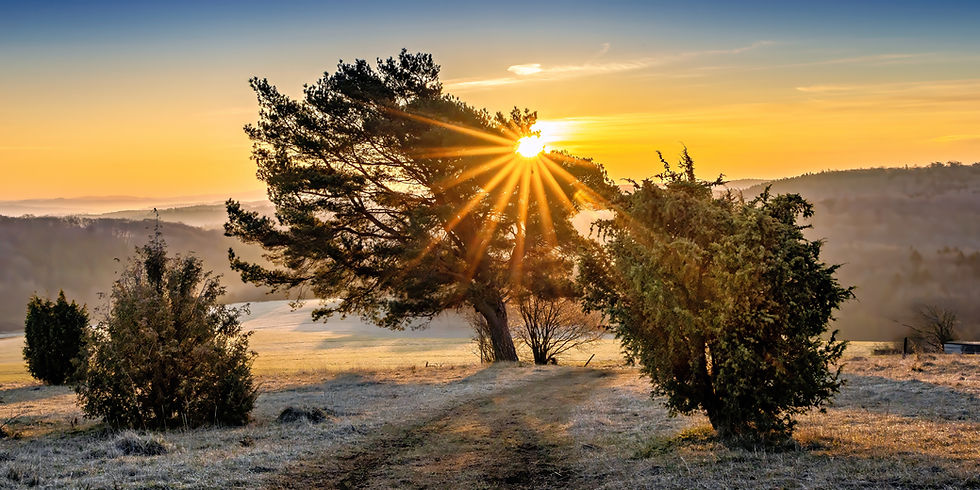
The more time I spend exploring local landscapes, the more I realize how little I truly need. Still water at dawn. A quiet forest path. Frost on the meadow. These are not lesser scenes; they are simply scenes that require attention instead of airfare. When photography becomes an encounter rather than a hunt, your images gain depth even when the landscape is modest.

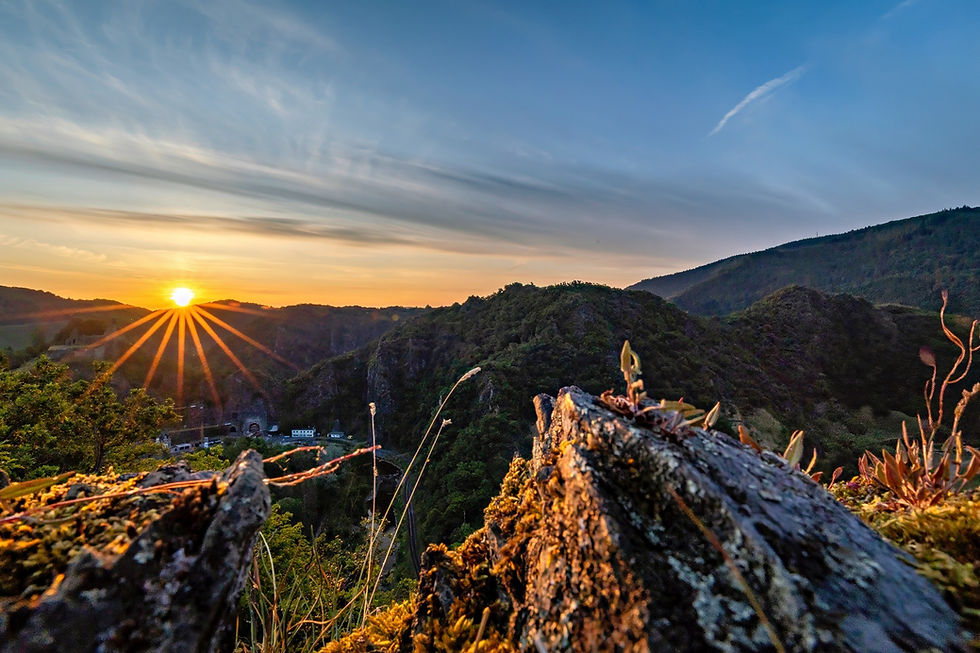
Every region has its own quiet wonders. You don’t need the Alps or Iceland to create meaningful work. In the Ahr valley, terraced slopes catch the evening sun in a way that feels almost Mediterranean. In the Eifel, moss forests echo the mood of New Zealand. In the High Fens, winter light resembles the tundra. These landscapes are not substitutes — they are originals. You only need to approach them as such.
![Moss-covered forest resembling New Zealand rainforest]](https://static.wixstatic.com/media/c27f63_710d4fb0bcdd42b1a2c11841cfe79ce7~mv2.jpg/v1/fill/w_980,h_653,al_c,q_85,usm_0.66_1.00_0.01,enc_avif,quality_auto/c27f63_710d4fb0bcdd42b1a2c11841cfe79ce7~mv2.jpg)
Photohiking is more than a method; it is a form of respect. It recognizes that nature is not a backdrop for our ambitions but a partner in our creative process. When we reduce distance, we reduce harm. When we slow down, we see more. When we let go of the pressure to produce, we rediscover joy.
In the end, the ethical footprint of a photograph is shaped not by its subject but by the journey toward it. Long-haul flights for single images are increasingly difficult to justify. Beautiful light often waits an hour away. The future of nature photography will belong to those who choose attention over spectacle, intention over consumption, and presence over distance. Attention over spectacle, intention over consumption, and presence over distance.

What truly matters is not how far we travel for an image, but how deeply we meet the landscape we stand in.

As a member of Nature First — Alliance for Responsible Nature Photography, I choose to align creativity with responsibility. If we truly love the landscapes we photograph, then the way we reach them matters as much as how we frame them.
© Lars-Henrik Roth – Wanderspezi – the Photohikers · www.photohikers.de